
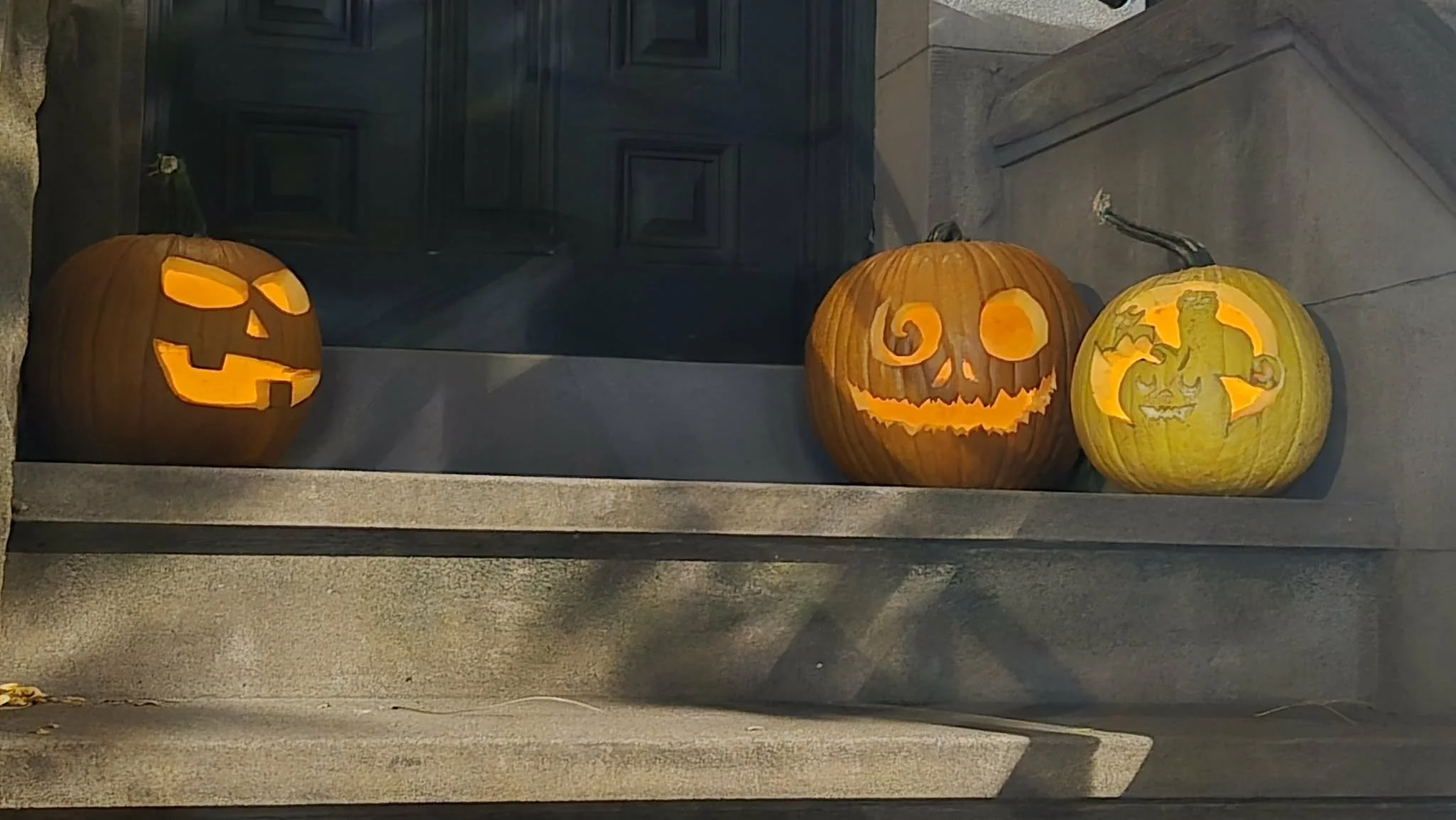
On the evening of October 31st millions of children in the United States, Canada, Scotland, Ireland, and elsewhere, will dress up in costumes and go door to door saying “treat or treat” and be given candy. Teenagers and adults will don their costumes and attend parties at homes or at clubs. As the candy is enjoyed and the excitement of the parties carries on, few will be aware of the ancient origins of today’s modern Hallowe’en celebrations.
Found in the pre-Christian folk tales and mythology of Ireland are accounts of a great festival taking place around October 31 to November 1. This festival is called Samhain (pronounced as: “sah-win” or “sow-in”). The ancient Celts had four seasonal festivals: Imbolc (February 2), Beltane (May 1), Lughnasadh (August 1) and Samhain (November 1) with Samhain as the most important festival. It may have also marked the Celtic new year.
Bonfires were lit and the festivities would last seven days —three days before Samhain, Samhain itself, and then three days afterwards. Other accounts state that the doorways to the Otherworld (afterlife, realm of the dead and spirits) would be open at this time. The spirits of ancestors could “cross over” into the world of the living; Samhain, then, was a festival of the dead.
As Christianity entered into Ireland, Scotland, and other parts of Europe, the religion of the Celts, their festivals, rituals, and communities were overrun by the powerful church. But the Church mixed in some of the old beliefs and incorporated the honoring of the dead into its calendar with All Saints’ (All Hallows) on November 1st, followed by All Souls’ on November 2nd.
As is often the case with colonialism, Indigenous traditions become mixed in with the colonizing culture. In this case some of the Celts' songs, customs, and rituals blended with the church or carried on in secularized mainstream forms.
The craving of jack-o-lanterns comes from the pre-Christian Irish practice of craving vegetables with faces that represented spirits and would be used to ward off evil spirits at the time of Samhain.
Today’s practice of wearing costumes at Hallowe’en may have originated with Samhain as people would wear animal skins, paint their faces, or use other disguises to hide themselves from evil spirits.
As for the act of trick-or-treating, less is known. But it has been suggested that people would dress up to represent local spirits or the dead and receive offerings on their behalf.
And the parties come from the Celts’ festivities where bonfires were lit, music was played, and good food and drinks were enjoyed. Whole communities came together to honor the dead and have one last big party before the coming of the harsh winter months.
Samhain inspired traditions came to the United States with the Irish immigration during the 19th century, especially around the time of famine in the 1840's. The Irish carried their traditions with them, and today it is one of the United States’ major holidays. “Halloween” as we call it began to take root in its modern forms in the US in the 1930s and 40s, and by the 1950s it was a mainstream cultural holiday.
Despite the colonization of the Celts, some have continued to observe Samhain as a religious holiday. Although many records were lost, modern Pagan communities — such as Wiccans and Druids, and Celtic Pagans—have attempted to reconstruct the holiday as best they can.
For many modern Pagans this is a sacred time of year when the spirits of our ancestors return home and dwell with us. It is a time to honor the last harvest season before the arrival of winter. For some it is also a spiritual new year.
Pagans will also use this as a time to let go of things that are no longer serving us (e.g.,bad habits, toxic relationships, etc.) and embrace the new.
Regardless of the specific traditions and rituals, and while it is seen as a solemn time of year, it is also a festive, joyous time as well! In celebrating our ancestors and marking death as part of the cycle of existence, Samhain serves as a powerful reminder of the preciousness of life and of the importance of remembering our spiritual heritage and ancestors.
This Hallowe’en season, should you choose to take part in parties and other festivities, remember that all of this has ancient origins rooted in the cycle of seasons and the wheel of existence. As we party and have a good time, may Hallowe’en remind us of the fragile, precious gift that is life and of the debt we owe to our ancestors for our present existence. And may we dance and sing, enjoy good food and drink, and celebrate all the joys and sorrows that come with life.
Oíche Shamhna shona daoibh! Happy Hallowe’en to you all!